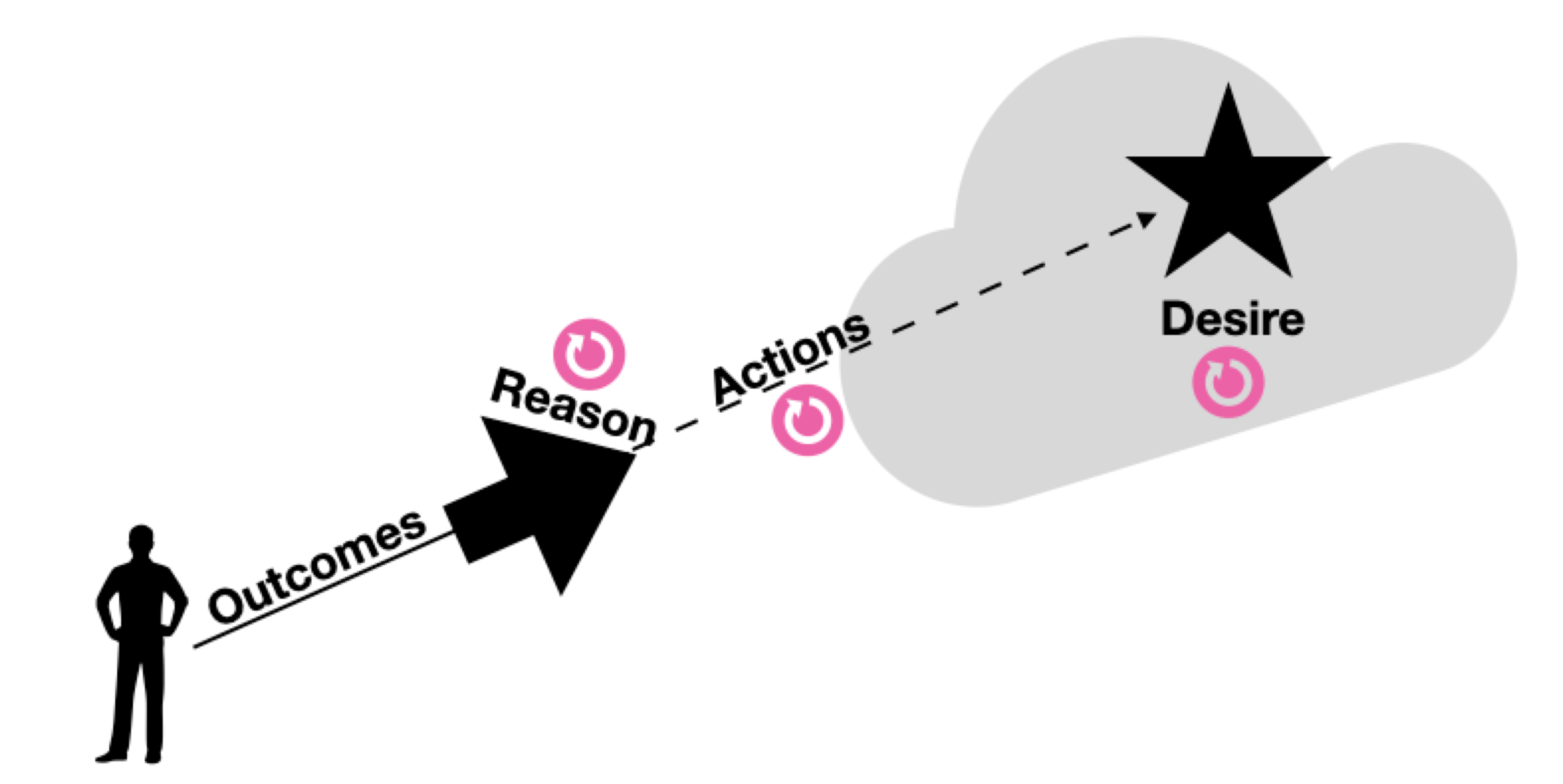
Desire is seen by many Christians as a bad thing. Desire is like good soil in a garden. The presence of a weed does not indicate that the ground is bad—it just indicates that what is growing there could be better. If you pull the weed without planting something better in its place, some other weed will grow in its place. This is why so many who are addicted never really conquer the addiction. They have to be on guard for the rest of theirlives, constantly implementing and maintaining sophisticated schemes to avoid circumstances that will overcome them. They mistakenly assume they have too much desire when in reality they simply have too little information. By finding out why weeds are not desirable, what plants are desirable, and filling your garden with them, you make it so that all of your soil is being used to the maximum beneficial purpose.
It is true that, by nature, our desires are inclined towards evil:
For all seek their own, not the things which are Jesus Christ’s. (Philippians 2:21)
While our desires can entice us towards evil, they can also entice us towards good:
For it is God which worketh in you both to will and to do of his good pleasure. (Philippians 2:13)
Desire is not, of itself, either good or evil. Desire is a powerful gift from God that, used correctly, is required to obtain the best outcomes. God actually commands us to seek for what we desire:
O Lord, thou hast given us a commandment that we must call upon thee, that from thee we may receive according to our desires. (Ether 3:2)
Desire is a required and helpful component of the gift of free choice. In order to be truly free to choose, we must have both desire and reason. Without desire, we could never act for ourselves:
5 And men are instructed sufficiently that they know good from evil...
16 Wherefore, the Lord God gave unto man that he should act for himself. Wherefore, man could not act for himself <u>save it should be that he was enticed by the one or the other.</u>
27 Wherefore, men are free according to the flesh; and all things are given them which are expedient unto man. And they are free to choose liberty and eternal life, through the great Mediator of all men, or to choose captivity and death... (2 Nephi 2)
Desire is sometimes used interchangeably for lust. Really, desire is only lust if left on its own instead of being combined with reason, which is another component of the faith process.
Desire only becomes lust when we stubbornly ignore new reasons that show that what we desired is not the best outcome available to us. Unfortunately, stubborn obstinance is the rule rather than the exception. For example, it was the reaction of the people when Jeremiah pointed out to them the insufficiency of their desires: “And they said, There is no hope: but we will walk after our own devices, and we will every one do the imagination of his evil heart.” (Jeremiah 18:12) It was also the response of the people to the wisdom Ezekiel brought them:
And they come unto thee as the people cometh, and they sit before thee as my people, and they hear thy words, but they will not do them: for with their mouth they shew much love, but their heart goeth after their covetousness. (Ezekiel 33:31)
Lust is to desire something without regard as to how one actually obtains it. That which is unlawfully obtained can’t be as good as that which is, even when it appears the same on the surface. The guilt that comes with ill-gotten gains sours what appears the same as honest gains. The lack of foundation of hasty acquisitions aborts any joy that might be found in them long before their natural life ends. Lust makes a counterfeit of the real thing.