Chapter 2: Faith and Desire
It will come as a surprise to most that God gives us what we desire:
...I know that he granteth unto men according to their desire... (Alma 29:4)
Therefore, the better the outcomes you desire, the better the outcomes you receive.
Perhaps some reason for the confusion lies in a misunderstanding of what desire is and isn’t.
Desire, of itself, is not bad
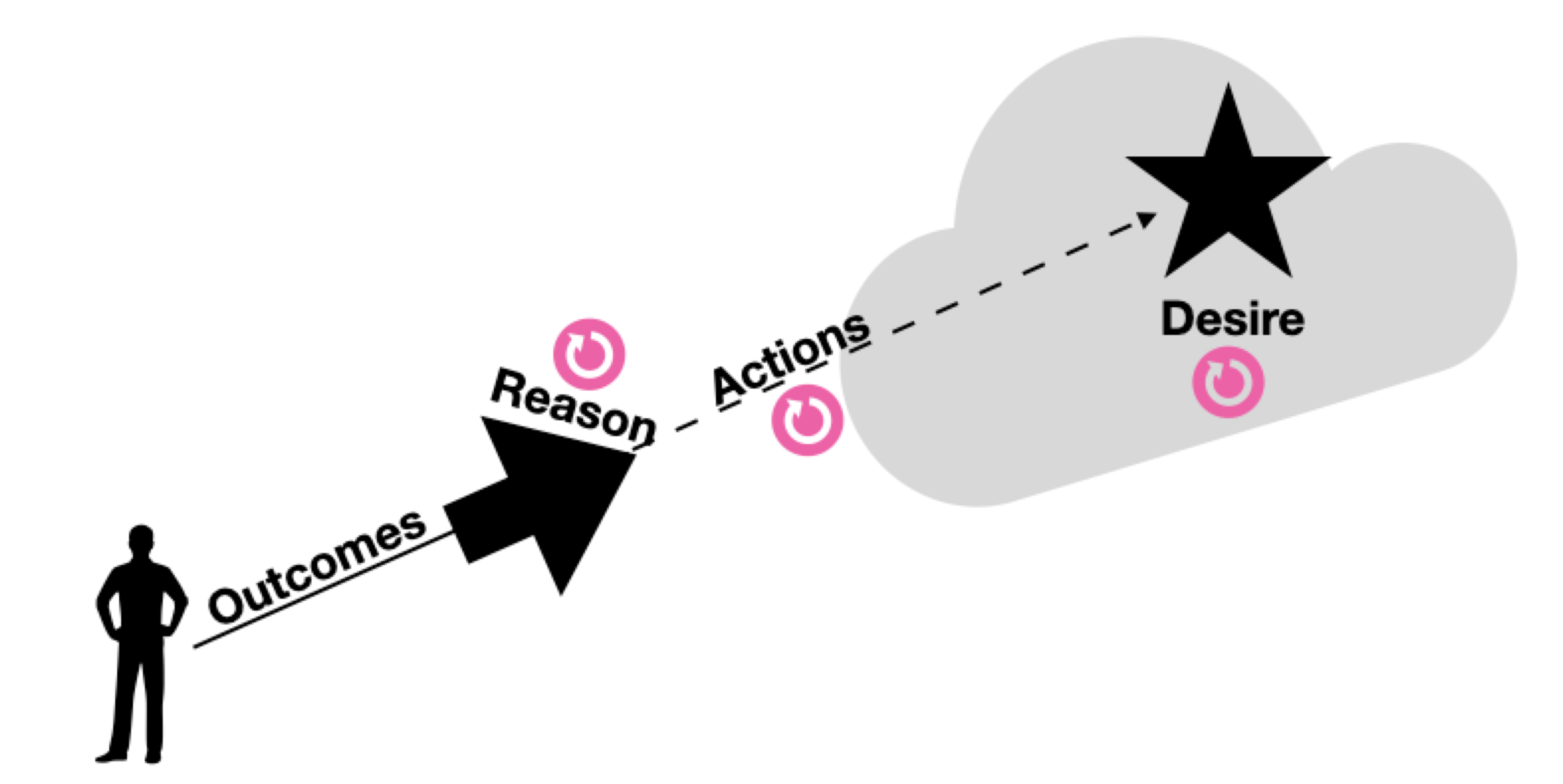
Desire is seen by many Christians as a bad thing. Desire is like good soil in a garden. The presence of a weed does not indicate that the ground is bad—it just indicates that what is growing there could be better. If you pull the weed without planting something better in its place, some other weed will grow in its place. This is why so many who are addicted never really conquer the addiction. They have to be on guard for the rest of theirlives, constantly implementing and maintaining sophisticated schemes to avoid circumstances that will overcome them. They mistakenly assume they have too much desire when in reality they simply have too little information. By finding out why weeds are not desirable, what plants are desirable, and filling your garden with them, you make it so that all of your soil is being used to the maximum beneficial purpose.
It is true that, by nature, our desires are inclined towards evil:
For all seek their own, not the things which are Jesus Christ’s. (Philippians 2:21)
While our desires can entice us towards evil, they can also entice us towards good:
For it is God which worketh in you both to will and to do of his good pleasure. (Philippians 2:13)
Desire is not, of itself, either good or evil. Desire is a powerful gift from God that, used correctly, is required to obtain the best outcomes. God actually commands us to seek for what we desire:
O Lord, thou hast given us a commandment that we must call upon thee, that from thee we may receive according to our desires. (Ether 3:2)
Desire is a required and helpful component of the gift of free choice. In order to be truly free to choose, we must have both desire and reason. Without desire, we could never act for ourselves:
5 And men are instructed sufficiently that they know good from evil...
16 Wherefore, the Lord God gave unto man that he should act for himself. Wherefore, man could not act for himself <u>save it should be that he was enticed by the one or the other.</u>
27 Wherefore, men are free according to the flesh; and all things are given them which are expedient unto man. And they are free to choose liberty and eternal life, through the great Mediator of all men, or to choose captivity and death... (2 Nephi 2)
Desire is sometimes used interchangeably for lust. Really, desire is only lust if left on its own instead of being combined with reason, which is another component of the faith process.
Desire only becomes lust when we stubbornly ignore new reasons that show that what we desired is not the best outcome available to us. Unfortunately, stubborn obstinance is the rule rather than the exception. For example, it was the reaction of the people when Jeremiah pointed out to them the insufficiency of their desires: “And they said, There is no hope: but we will walk after our own devices, and we will every one do the imagination of his evil heart.” (Jeremiah 18:12) It was also the response of the people to the wisdom Ezekiel brought them:
And they come unto thee as the people cometh, and they sit before thee as my people, and they hear thy words, but they will not do them: for with their mouth they shew much love, but their heart goeth after their covetousness. (Ezekiel 33:31)
Lust is to desire something without regard as to how one actually obtains it. That which is unlawfully obtained can’t be as good as that which is, even when it appears the same on the surface. The guilt that comes with ill-gotten gains sours what appears the same as honest gains. The lack of foundation of hasty acquisitions aborts any joy that might be found in them long before their natural life ends. Lust makes a counterfeit of the real thing.
Receipt requires desire
One day, during his mortal ministry, the Lord pointed out that his disciples had neglected to recognize that he had all power to lead them to what they desired, as evidenced by the fact that they had not bothered to ask him:
23 And in that day ye shall ask me nothing. Verily, verily, I say unto you, Whatsoever ye shall ask the Father in my name, he will give it you.
24 Hitherto have ye asked nothing in my name: ask, and ye shall receive, that your joy may be full. (John 16)
God is able to send many blessings to us without our having asked for them. However, many will require us to first ask for them. Jesus knew that a fullness of joy could only come through first asking.
Do you believe in an all-powerful God who knows all things and desires your greatest possible joy? If so, why would you restrain yourself from asking him to lead you to the fulfillment of what you desire?
You might contend that God is also all-knowing, and since he already knows what you want, you don’t need to tell him.1 Asking is not about telling him what you want. Rather, it is about explicitly recognizing he is the source of all good and consciously recognizing what it is you really want, both of which provide you with compelling reasons to accept and walk the path he sends to lead you to what you desire, no matter how otherwise unpleasant, difficult, or surprising it may be.
The purpose of desire is to cause us to act in ways we otherwise wouldn't, in order to come to the point where we are willing to do what is required to obtain what we seek. Without desire, you will never commit the actions required to obtain outcomes beyond what you already have.
Joy requires desire
Far from being something that should be repressed, desire is a critical part of happiness. Happiness requires both something that helps you and something that you desire.
Benefit alone is insufficient for happiness. You can have what benefits you and still be miserable if you do not recognize or value that benefit. No matter how good something is, it will not give you joy unless you want it. We can’t be happy without desire any more than a child can rejoice in eating kale due only to its nutritional value. If a child doesn’t want kale, it doesn’t matter how healthy it is, it will not be something that gives them joy. What improves will only bring you happiness when you want improvement.
While desire is essential to joy, it is also insufficient in and of itself to provide you joy. What is desired must also actually provide objective value to you—it must help you. You can be miserable with exactly what you want if it doesn’t benefit you. For reference, see the misery common among the rich and famous. The end of misplaced desire is misery.
Honesty in desire
Sometimes, particularly in prayer, we try to dress up what we really want, pretending we are more noble than we really are. There is no point pretending that God doesn’t know what you really want. God sees your heart and he knows what you really want: “Lord, all my desire is before thee; and my groaning is not hid from thee.” (Psalm 38:9)
But what of those who know they desire things they shouldn’t? Some attempt to fight temptation as a matter of will, thinking that, through sheer determination, they will somehow change what they desire. These won’t be successful for more than a brief moment, as those who attempt to fight desire via willpower will still be plagued by desire to do what they know is wrong.
It is vain to pretend to seek what we do not actually desire:
And likewise also is it counted evil unto a man, if he shall pray and not with real intent of heart; yea, and it profiteth him nothing, for God receiveth none such. (Moroni 7:9)
This kind of desire will never produce anything of worth.
It is necessary to desire “with full purpose of heart, acting no hypocrisy and no deception before God, but with real intent.” (2 Nephi 31:13) You need to be ruthlessly honest about what you really want and why.
Enumerate what it is you want. Be specific. Be clear. Write it down. Keep it. Refer back to it.
The more detail you provide, the more power your desire will have to motivate you.
As a flawed human being, you are sure to be less than perfect in your idea of what you want, your idea of how to obtain it, and your diligence and exactness in implementing those ideas. Only through honesty in execution can you learn the accuracy of the presumed path to what you want, notice the need for corrections, and summon the courage and stamina to make those corrections.
Without honesty in your desires, you’ll never be able to change your desires when change is needed. Improved desires come through reason, and reason can’t operate from false premises.
Integrity is required in order for us to obtain what we seek, and as long as we are dishonest about our desires, we cut ourselves off from both the fulfillment of those desires and any potential improvement to those desires.
The discovery of misplaced desire
God’s desires are based on a perfect understanding of what things are worth, what they cost, and what endures. Our desires, on the other hand, are based on foolish assumptions, false beliefs inherited from others, and vain wishes.
Man’s desires, by default, are not God’s desires. They are much lower: focused on what is easy, what is quick, what provides cheap pleasure, and what makes sense to our ignorant and foolish minds:
4 O how foolish, and how vain, and how evil, and devilish, and how quick to do iniquity, and how slow to do good, are the children of men; yea, how quick to hearken unto the words of the evil one, and to set their hearts upon the vain things of the world!
5 Yea, how quick to be lifted up in pride; yea, how quick to boast, and do all manner of that which is iniquity; and how slow are they to remember the Lord their God, and to give ear unto his counsels, yea, how slow to walk in wisdom’s paths! (Helaman 12)
Your default desires will not lead you to happiness. They will disappoint you by leading you to:
- Things which are fleeting.
- Things which are less than what you think they are.
- Things that are not nearly as good as what you don’t yet know about or correctly value.
In order to become all God intends you to be, you have to replace your natural desires and actions with the Lord’s desires and actions:
But seek ye first the kingdom of God, and his righteousness; and all these things shall be added unto you. (Matthew 6:33)
What God sends you will conflict with what was there before. That’s why obeying him is described as yielding to him. You have to yield to all things that he sends you:
For the natural man is an enemy to God, and has been from the fall of Adam, and will be, forever and ever, unless he yields to the enticings of the Holy Spirit, and putteth off the natural man and becometh a saint through the atonement of Christ the Lord, and becometh as a child, submissive, meek, humble, patient, full of love, willing to submit to all things which the Lord seeth fit to inflict upon him, even as a child doth submit to his father. (Mosiah 3:19)
Unfortunately, people do not embrace God’s obviously superior guidance:
Behold, they do not desire that the Lord their God, who hath created them, should rule and reign over them; notwithstanding his great goodness and his mercy towards them, they do set at naught his counsels, and they will not that he should be their guide. (Helaman 12:6)
Why do people prefer such base alternatives when God offers such wonderful alternatives? Because the natural man: 1) does not perceive the good things God has to offer; 2) is not willing to let go of the inferior things they presently have to receive something better; and 3) is not willing to pay the price associated with what they say they want. Each of the foregoing problems are just facets of one problem: dishonesty.
Desire motivates you to endure pain, not to avoid it
Every step in life comes with a realization that you have less than what you thought and that the attainment of something better will require more than what you’ve done. The positive side to this realization is realizing that there is something better out there than what you already have.
There is always something better. The question is whether we are willing to pay the price required to obtain it.
We tend to tire of setting our hearts on something only to be bitterly disappointed in our expectations. Unfortunately, success in the game of life is determined by how many times, and how brutally, you are willing to be disappointed. Those who soften their desires in hopes of sparing themselves pain will only rob themselves of joy, and those who avoid disappointment through quitting the search will never obtain lasting or deep joy.
What makes it hard is that you can’t see how much better what is still out there actually is until you get it, and you can’t get it without walking through what seems to be unending darkness.
You have to keep trying. You have to try harder.
The stronger your desire, and the greater the value of what you desire, the more often and more deeply you will be disappointed. The less urgently you desire, and the lesser the value of what you desire, the less you will receive.
Those who attempt to avoid pain will only do so short-term, because they will only have “that which they are willing to receive, because they were not willing to enjoy that which they might have received.” (D&C 88:32) If you want to receive all the joy God has made available to you, you have to believe he has greater joy to give than what you can presently imagine:
For since the beginning of the world have not men heard nor perceived by the ear, neither hath any eye seen, O God, besides thee, how great things thou hast prepared for him that waiteth for thee. (D&C 133:45)
If you truly believe this, you must surely desire that level of joy. If you desire that level of joy, you are assured to suffer great disappointment as he teaches you what it takes to obtain it, why it is as valuable as it is, and how extensive is the list of what will not provide it. There is no other way.
Joy is what you really want
Desire is not just a question of asking what you want. Why you want what you want is at least as important to consider. Your why is more important than your what because the why always dictates the what: your reason for wanting what you want is only because of why you want it. Refining your desires requires you to ask what you want, then to ask yourself why you want it, then to ask if what you said you wanted is really the best way to obtain what you seek. By repeating this process over and over again, you will reveal what you really want.
It’s a rare thing for a person to relentlessly drill into what it is they really want. This can be an extremely unpleasant experience, because it will very likely reveal that you’ve wasted significant emotion and energy on situations that weren’t justified. You will also very likely be presented with realizations that require you to leave your comfort zone: bigger dreams, and the more radical actions required to obtain them.
Those few who dare to practice the relentless refinement of what they desire will find themselves moving up a hierarchy of desires. They may start anywhere. Perhaps they desire an object, or a relationship, or comfort. No matter where someone starts in their desire, if they continue in learning and introspection, they will arrive at the same end. At some point, everyone will come to the realization that what they really want is joy.
Joy is the foundational reason we do everything we do. Without extreme honesty and sharpened reason, we will do a poor job in obtaining it. This is not surprising: throwing a bullseye in darts is hard, but imagine how unlikely it is when you don’t even know about the dartboard!
God knows all things. God knows of joy beyond what you can imagine:
But as it is written, Eye hath not seen, nor ear heard, neither have entered into the heart of man, the things which God hath prepared for them that love him. (1 Corinthians 2:9)
Only in seeking him will you find the path to the greatest joy:
3 Trust in the Lord, and do good; so shalt thou dwell in the land, and verily thou shalt be fed.
4 Delight thyself also in the Lord; and he shall give thee the desires of thine heart.
5 Commit thy way unto the Lord; trust also in him; and he shall bring it to pass. (Psalm 37)
The path to obtaining this joy includes many things that take preparation and experience to bear:
Ye cannot behold with your natural eyes, for the present time, the design of your God concerning those things which shall come hereafter, and the glory which shall follow after much tribulation. (D&C 58:3)
However, the Lord assures us that all that is important will be given along the way:
25 Therefore I say unto you, Take no thought for your life, what ye shall eat, or what ye shall drink; nor yet for your body, what ye shall put on. Is not the life more than meat, and the body than raiment?
26 Behold the fowls of the air: for they sow not, neither do they reap, nor gather into barns; yet your heavenly Father feedeth them. Are ye not much better than they?
27 Which of you by taking thought can add one cubit unto his stature?
28 And why take ye thought for raiment? Consider the lilies of the field, how they grow; they toil not, neither do they spin:
29 And yet I say unto you, That even Solomon in all his glory was not arrayed like one of these.
30 Wherefore, if God so clothe the grass of the field, which to day is, and to morrow is cast into the oven, shall he not much more clothe you, O ye of little faith?
31 Therefore take no thought, saying, What shall we eat? or, What shall we drink? or, Wherewithal shall we be clothed?
32 (For after all these things do the Gentiles seek:) for your heavenly Father knoweth that ye have need of all these things. 33 But seek ye first the kingdom of God, and his righteousness; and all these things shall be added unto you. (Matthew 6)
The greatest outcomes will come to those who can focus their desire on God:
I opened my mouth and panted [with eager desire], for I longed for Your commandments. (Psalm 119:131, AMP)
To have your desire focused uniquely on God is the meaning of Jesus’ instruction to make our “eye single” to God’s glory:
21 For where your treasure is, there will your heart be also. 22 The light of the body is the eye: if therefore thine eye be single, thy whole body shall be full of light.
23 But if thine eye be evil, thy whole body shall be full of darkness. If therefore the light that is in thee be darkness, how great is that darkness!
24 No man can serve two masters: for either he will hate the one, and love the other; or else he will hold to the one, and despise the other. Ye cannot serve God and mammon. (Matthew 6)
If thy whole body therefore be full of light, having no part dark, the whole shall be full of light, as when the bright shining of a candle doth give thee light. (Luke 11:36)
You can only have one top priority. What do you desire the most?
If you are wise, you will desire God more than anything else. You will realize that desiring God is the real-life analog to using one of your wishes from a genie to ask for infinite wishes. There is a reason God commands us to seek him above all else. His only desire is for us to obtain everything he has, and the only way that can happen is if we seek him above all else. God’s desires for us will lead us to joy, happiness, and peace, and will provide all of those things in enduring, ever-increasing abundance:
And moreover, I would desire that ye should consider on the blessed and happy state of those that keep the commandments of God. For behold, they are blessed in all things, both temporal and spiritual; and if they hold out faithful to the end they are received into heaven, that thereby they may dwell with God in a state of never-ending happiness. O remember, remember that these things are true; for the Lord God hath spoken it. (Mosiah 2:41)
Changing desire
Too often we wrongly assume desire to be something innate— something we can’t control or change. This is a false belief, and as long as you hold it, you will be a slave to whatever limited outcomes your present desires lead you to.
Desire is a choice. Desire is how you wish things were. There is nothing external or transcendent about desire. Desire is completely within and completely up to you.
Agency is the ability to choose to act independent of what is felt. Our feelings do not dictate our actions. God made us free to choose based on our thoughts. We can choose to submit our thoughts to our feelings, and thus enslave ourselves to a narrow, often incorrect perspective, but we do not have to.
You change desire through choosing differently. You choose differently as a result of having different reasons. You change desire through changing your reasons.
Desire is a judgment of value. When the value we perceive in things changes, our desires immediately change. The value we perceive in things is not an innate quality. It is a choice, and to the degree we are honest, it is a choice based on how things really are.
Changing your desire is a process of reason, not a question of willpower. Jesus said: “I have overcome the world.” (John 16:33) As long as you are overcome by the world, you are missing something he has to teach you.
Jesus was tempted like we are, but he did not succumb:
For we have not an high priest which cannot be touched with the feeling of our infirmities; but was in all points tempted like as we are, yet without sin. (Hebrews 4:15)
If you have to avoid all sorts of situations in life to avoid succumbing to what you know isn’t right, you aren’t lacking willpower. You are either lacking information, honesty, or both.
The solution to temptation is not a matter of what you want, but why you want it.
You change your desire through using your faculties of reason to better understand the consequences of what it is you desire, to evaluate whether better consequences exist in another desire, and to exercise the honesty to prefer what is truly best for you.
Desire is completely independent of reality. Your desires can be completely aligned with reality, or completely opposed to reality. The more your desires align with reality, the more successful you will be in obtaining the outcomes you seek. To encounter the greatest joy, you must reconcile your desires and actions to reality—to things as they really are, not how you wish they were.
Limited understanding of reality will cause us to place our desires on things that have less value than available alternatives. Only God, who knows all things, perfectly understands what actually benefits, and by how much. It is essential that we use reason and effort to figure out God’s desire, and not merely seek whatever vain desire crosses our mind. The best desires are those that align with God’s, because they are the desires that align most with reality.
Wise desire is fueled by accurate valuation of future outcomes. God has all things before him continually through faith. He acts in the present with equal deference to the future.
Humans, by default, assign enormous preference to the present, even at the expense of the future. To become more like God, we must learn to weigh the future honestly, which will result in our willing sacrifice of the present for the sake of the future.
Don’t constrain your desires to an understanding of reality as what it seems to be here and now. Your desire should be reconciled to the fact that future outcomes exist that are far beyond your idea of what is possible—far beyond the best thing you can currently imagine. Your desire should also include the fact that things can be worse than you can currently imagine. Prepare accordingly.
Without faith, our understanding is limited to things as we think they are. With faith, however, we are provided a way to “see afar off,” or accurately assign present value to outcomes that are distant in time (see Moses 6:27 and Hebrews 11:13).
With faith, we gain the belief that things as they were, are, and will be consist of more than what we presently perceive. This means we gain access to the lessons from the past that we don’t currently know, opportunities in the present that we don’t currently recognize, and outcomes in the future that would otherwise be outside of our reach.
Placeholders
God has prepared outcomes far greater than what we can imagine:
But as it is written, Eye hath not seen, nor ear heard, neither have entered into the heart of man, the things which God hath prepared for them that love him. (1 Corinthians 2:9)
God will incessantly steer you toward far better outcomes than what you know to seek. God will try to lead us to better things beyond what we know to ask:
Likewise the Spirit also helpeth our infirmities: for we know not what we should pray for as we ought: but the Spirit itself maketh intercession for us with groanings which cannot be uttered. (Romans 8:26)
Your willingness to trust him and receive what he wishes to give will determine how successful he can be.
The natural man doesn’t perceive the good things that are available. The natural man just tends to pick from what is closest or easiest.
We tend to fulfill our desires with their nearest available potential fulfillment. For example, if you long for deep intimacy with a human, you may go on dates with the most appealing person in your immediate circle in hope that this person fulfills your desire.
There is nothing inherently wrong with searching around us for the fulfillment of our desire. The trouble comes when we refuse to do anything more. Any meaningful blessing will not be fulfilled as easy as ordering something online. It doesn’t come to your doorstep in two days with free shipping.
Thankfully, the Lord knows what we really want—what will bring us the most joy—better than we do. He said:
9 Or what man is there of you, whom if his son ask bread, will he give him a stone?
10 Or if he ask a fish, will he give him a serpent?
11 If ye then, being evil, know how to give good gifts unto your children, how much more shall your Father which is in heaven give good things to them that ask him? (Matthew 7)
He didn’t say that good fathers would give bread to the son that asks for bread, or fish to him who asks for it. Instead, the implication is that a good father will give his son things at least as good as what he asks for.
The path to better things begins in what you presently perceive and desire, but it will progress on to things beyond your current understanding or interest. In almost every case—and certainly in the case where the desire is anything but trivial— what you seek will not be available in your present circumstances . You will have to be stronger and better to qualify for what you seek. You will have to achieve and learn much more than you have yet. You will have to find people and circumstances that fit what you seek.
Desire is a powerful magnet that attracts us to what is truly worthy of our hope. God will use your desires to direct you toward greater outcomes by showing the inadequacy of what you thought would fulfill them. God orients us and motivates us along the path by revealing the insufficiency of our desires by showing us that what they lead to—or, more often, the actions we think lead to them—lead to pain, loss, and sorrow. He will show you that the easy outcomes you slotted into your deep desires are insufficient, providing you with the motivation you need to become willing to endure the greater sacrifice, change, and toil to obtain better outcomes.
We ought to realize that whatever we identify as the object of our longings is probably merely a placeholder: something that we understand and desire well enough to motivate us to search for its fulfillment and act to that end.
Placeholders are the prototype of what it is we seek. They are the people, actions, and situations we assume lead to the fulfillment of our desire. They represent the earliest semblance of what God will give us to fulfill our desires in the state necessary given our present understanding and the limits of what we are willing to receive.
Placeholders are not what we actually seek. They are merely something that holds the spot of the real fulfillment of our desire until we better understand what to ask for and seek. They are waypoints on the path to the outcomes we seek. They are the fullest expression of our as-yet limited understanding of what it is we seek and how it is we will go about obtaining it.
While placeholders can provide a needed stepping stone in our progressive realization of our desires, realize that they become barriers to what we seek the minute we realize they are placeholders. The purpose of waypoints is to get us to walk to them in order to walk closer to our eventual target. A placeholder may be the only way to get you to the next step, but once you’re at the next step, they will limit you to that step until you let them go. We need to courageously let go of what he reveals is not the fulfillment of our desire just as soon as he has shown us.
We can ignore the obvious signs that placeholders are not what we are seeking for. When we do this, we abandon our desires and settle for something far less. God does not settle. God promises to give us things at least as good as what we ask for. He promises to fill us to overflowing, not to half full. It is we who settle. We settle by responding to his revelation that further action will be necessary by refusing to act or by interpreting the discovery negatively. Will you be honest enough to let go of what you previously sought when its limits are revealed?
All too often, we pray and pray for God to advance us on the path we think will lead to what we desire. No amount of prayer can ever change the wrong path into the right path. We should pray about the destination and be very open to whatever path may be required to get there. We need to let go of our expectation of what the outcome will require:
5 Trust in the Lord with all thine heart; and lean not unto thine own understanding.
6 In all thy ways acknowledge him, and he shall direct thy paths. 7 Be not wise in thine own eyes: fear the Lord, and depart from evil. (Proverbs 3)
We need to open-mindedly seek God to show us where to start, and to show us the next step.
As he reveals the limits of what we presumed to be the object of our desire, he shows us how we must increase the window of what we are willing to desire, the reasons we hold, and the actions we are willing to take, as our window is not yet as wide as it needs to be to fit the blessing we seek.
You won’t be able to progress further towards your desire until you courageously face emptiness instead of keeping a known placeholder in the slot of your desire. Hearkening back to the previous dating analogy, continuing to date people you know are insufficient for you won’t bring you closer to the right person; it will keep the right person away so long as you do it.
A placeholder will only lead you closer to your ultimate goal if it is actually in the path of that ultimate goal. Counterfeit placeholders will serve the opposite purpose: they will prevent you from taking steps towards the ultimate goal. The key to telling the difference between a productive placeholder and an impeding counterfeit placeholder is in being honest about the qualities of the placeholder. For example, suppose a person has an idea of the family life they would like to live, yet is dating someone they have ample reason to believe will never be capable of such a life. Remaining in that relationship will cause the person to block the very means God could use to orient them to the fulfillment of their goal. If you have valid reasons for how that object, person, or experience deviates from what you seek, you are obliged to let it go. Until then, embrace it as the real thing and enjoy what temporary fulfillment it may provide.
How will you know when you have obtained the real thing? Every placeholder you experience will increase your understanding of the real thing. Every placeholder you dethrone will increase your confidence when you have found the real thing, because it will increase your understanding of its properties. Your list of why previous placeholders were not right is also the list of qualities that will certify the situation that is.
Dare to dream
Within each of us lies an influence that, for the most part, goes unused and even unrecognized. Deep inside of each of us lies the ability to dream. This faculty is significant, even though it is not embraced by many. This is the part of us that wonders what could be. It is the genesis of everything of deep meaning that we accomplish in life. Those who embrace this faculty will achieve things others don’t even dare imagine. Those who neglect or ignore it will endure relentless torment from its nagging whispers about what could have been.
In order to become all God intends you to be, you will have to dare to desire amazing things. Faith is a willingness to believe there is something better available, even if you already have something good.
You don’t realize it, but you are limiting what God can do through what you are willing to desire. You have to get to the point where you can boldly believe in a God of miracles—a God who does impossible things all the time. “With men this is impossible; but with God all things are possible.” (Matthew 19:26)
There is a path to every outcome, but whether we choose to seek, find, and follow that path is another question altogether. Faith is what makes one seek what no one else is willing to seek, find what no one else has found, and do what no one else is willing to do. All of this starts with daring to desire what no one else desires, then seeking the Lord with unrelenting open-mindedness so that he can reveal to you the path that will yield the outcome you seek.
Far too many of us significantly limit our faculty to dream by filtering out any potential outcomes that are not tied to what we experience in the physical world. Unlike our physical senses, our desires need not be dampened in any way by what we see before us. The spirit is an infinite, unquenchable channel. To obtain all that God would have us obtain, we must avoid imposing any limits to his infinity.
It seems that children most naturally embrace unbounded dreams. For them, everything is so new and untested that it takes far less to differentiate the fanciful from the practical than it does with adults. Somewhere along the line, children learn to limit themselves to what has already been done and to what they see manifested in the lives of those around them.
You have to relearn to dream without tethering yourself to your present circumstances. Faith requires looking and thinking beyond present bounds. Where you are right now is completely irrelevant to what you can obtain. Where you are right now only matters in the reason and action steps of the faith cycle. Don’t make the mistake of limiting your desires. Desire is about really being honest about what you want, not about finding out what it will take to get it or whether you are willing to do it.
In order to become all God intends you to be, you have to set aside the limits you place on yourself. Your accomplishments with God’s strength will surpass the many limitations you have. Solomon was not born the wisest man in the world. God brought him up to his wise stature. You will likewise have to rise beyond what you think are your limits. You will have to encounter and overcome things that you think are beyond you.
While we are limited in our physical resources, there is absolutely no limit to the ideas you can consider, and those ideas can be engineered to work within the constraints of the physical world to generate what was previously considered impossible—or not even considered at all.
Perhaps part of our discouragement comes from the realization that we, personally, are unwilling to do what it would take to have an unusually abundant life. Most of us are far less foolish than we act, and many will quickly realize that desires are attached to action. Having an ample list of things that they are not willing to do, many will quickly abort any desire that touches on this list in the earliest stages of ideation, usually without conscious thought. Unfortunately, the masses that so smoothly abort desires seem never to develop as smooth a satisfaction with the outcomes they consistently choose. Having turned away from something better due to an unwillingness to do what it would take to obtain it, they still writhe and complain about what they opted for instead, as if these things are not completely coupled.
In order to become all God intends you to be, you will have to courageously face bitter disappointment. Perhaps part of the reason for the gradual dampening of the magnitude of our dreams is the pain that comes from the realization that things and people are not what they seemed. Children 26
begin life with a default willingness to trust. They have high hopes of people and outcomes. Their implicit trust attenuates over time through repeated disappointments. Eventually, their trust becomes something that must be won, not something that is automatically bestowed.
You can’t desire what your heart is not set on, and given the likelihood of your desire being based on incomplete understanding, you are bound to have your heart break when God shows you the insufficiency of the thing you thought would fulfill your desire. The more important and beneficial the subject of your desire, the more you can count on heartbreak. The heartbreak is unavoidable, because it is the only way you can be led on closer and closer to the thing you actually seek. The more important what you seek, the more times and more deeply your heart will break. Playing it safe will guarantee you never obtain what you seek. No matter how much you lie to yourself about settling for something less, the day will come when you are filled with regret and remorse for having done so. If you wait until it is too late to do something about it, that regret will be yours eternally.
For some, relentless disappointment of unmet expectations, crashing down incessantly like waves on a shore, coalesces in the realization that they possess an outsized longing that nothing in this world seems to be able to satisfy. Those coming to this realization possess an enormous gift. They alone will ever marshal the requisite desire to truly seek the Lord with all their heart, might, mind, and strength. It is Christ alone that is the only hope they have of ever satisfying the longing within. Unfortunately, though few ever get to this point, most of those who do will run from this realization by any means possible, too scared of what it means: that normality truly has nothing to offer, that they will never possess the vacuous happiness of the damned, that it is as tenuous and fleeting as they supposed, and that the relationships that will actually satisfy them are exceedingly few and will only be found through extreme and socially-rejected measures.
In order to become all God intends you to be, you will have to courageously and boldly do what is reasonable, even when it is unpopular, difficult, or unlikely. When you have faith, you will find yourself constantly doing things others dismiss as impossible. As you look back on a life of faith, you will find that nearly everything of value was an impossibly long shot. Still, there is a significant difference between actions of faith and unwise risk. Faith is always justified. Faith is not about acting without reason. Faith requires reasons. The question is do the reasons justify the action? The lack of bold moves in the life of the faithless is not about a lack of reasons to make bold moves, but rather a lack of honesty in assessing the value of potential outcomes and incorrectly confusing constancy or normality for lack of risk. For example, a mid-career change might be considered a leap of faith for those who value constancy, but only because they are incorrectly valuing constancy compared to the outcomes possible in a career move.
In order to become all God intends you to be, you have to face persecution from others. As a person exercises the needed courage to embrace and develop their dreams, they will find themselves surrounded by greater and greater resistance and persecution from others. The more a person dreams, the more they will find that others do not. Dreamers find themselves bombarded by constant evidences that other people do not think or feel the way they do. They learn quickly—usually around the age of puberty—that the easiest way to deal with their dreams is to shut them down in any way possible. But dreams do not die an easy death. No matter how much drugs, alcohol, travel, shallow relationships, sex, or other means are used to squash them, their roots will endure and issue a constant cry of what might have been.
In order to become all God intends you to be, you will have to subject yourself to continual change. Until you are like him, he has more to change in you. If your desires, reasons, and actions remain unchanged, your outcomes will also remain unchanged. Following “dead works” will never yield the same living, changing, growing, custom, interactive guidance as a real relationship with God will.
In order to become all God intends you to be, you have to set aside your preconceived notions about the path to become all you can be. Joseph, son of Jacob, was not born as the second most powerful man in the known world. God brought him up to that outcome through slavery, false imprisonment, and abject abandonment from all who should have cared about him. Do you have reason to believe your path will be any less surprising?
In order to become all God intends you to be, you have to submit to any timetable he may have. Abraham’s path towards a righteous son—which was the consuming desire of his heart—lay in waiting until miraculous old age to see it fulfilled.
Dreams, unattempted, will never fully die. They accumulate, and each one will relentlessly haunt the person for the duration of and even beyond this life. A significant portion of the torment of hell is an everlasting awareness of all the good outcomes that you had the means to bring about for yourself and others, but chose not to.
Dare to dream! Dare to set the ordinary life aside. Dare to listen to the sudden strokes of ideas that come to your mind. Dare to believe there is a path to anything you can imagine. Dare to be honest about the lackluster outcomes of what everyone else does. Dare to recognize faulty solutions to problems in spite of the fact that everyone else embraces them. Dare to reflect on, study, and critically think about life.
Footnotes
- 1. Be not ye therefore like unto them: for your Father knoweth what things ye have need of, before ye ask him. (Matthew 6:8) ↩